As a former chef based in the US, Mallory Legg was struggling to decide what she wanted to do within journalism – or how to get there. “I wasn’t totally sure what I wanted to do as a job, and I knew that I loved food, and I had been a chef before, and I wanted to write,” she tells Journo Resources.
However, once she hit on the right course, things all fell into place. “As soon as I had my interview at City St George’s, I was really sold on it, and I knew that it would be a really great place to nurture those relationships with companies and journalists.” As a graduate of the MA Magazine Journalism, she now works as a food and drink writer for The Handbook.
But for other emerging journalists looking to further their journalism careers, how do you begin? Studying in the UK is a great way of growing your knowledge while experiencing a new culture, but why should you study journalism in the UK as an international student?
We spoke to the experts at City St George’s, University of London, home to one of the UK’s leading journalism departments as well as an inclusive and growing community of international students who thrive in their academic environment.
Why Study Journalism Internationally?
With so many exceptional institutions around the world, how does a budding journalist begin to narrow their options down?
As an American who studied an undergraduate degree in Cultural Anthropology in Scotland, Mallory chose to further her studies at City St George’s after searching for the “best journalism programme in the UK”.
With somewhat of a career pivot in mind, as well as being an international student, it was important to Mallory that she establish a solid network in her field and choose an institution that had a strong pipeline from study to work. “Now that I have a job, I’m meeting journalists and our connection is that we went to City. So it’s nice to have that sort of point of reference, especially as somebody who’s not from the UK.”
Dr Zahera Harb, Director of Journalism Postgraduate Studies at City St George’s, agrees that alongside the powerful network the institution has in the UK media landscape, another strength is the diversity of its class. She says that, with their department being home to over 16 nationalities in the academic year of 2025-26, students will be introduced to a network of future journalists that will be working across the world.
“Throughout the years that I’ve been teaching on this programme, I could see how graduates are actually building networks – and it’s helping their journalism. Because if something is happening in Armenia and [if] students have had someone that was on their course from Armenia, for instance, you have a contact you can call or email, and if they can’t help you, they will put you in contact with people that can.”
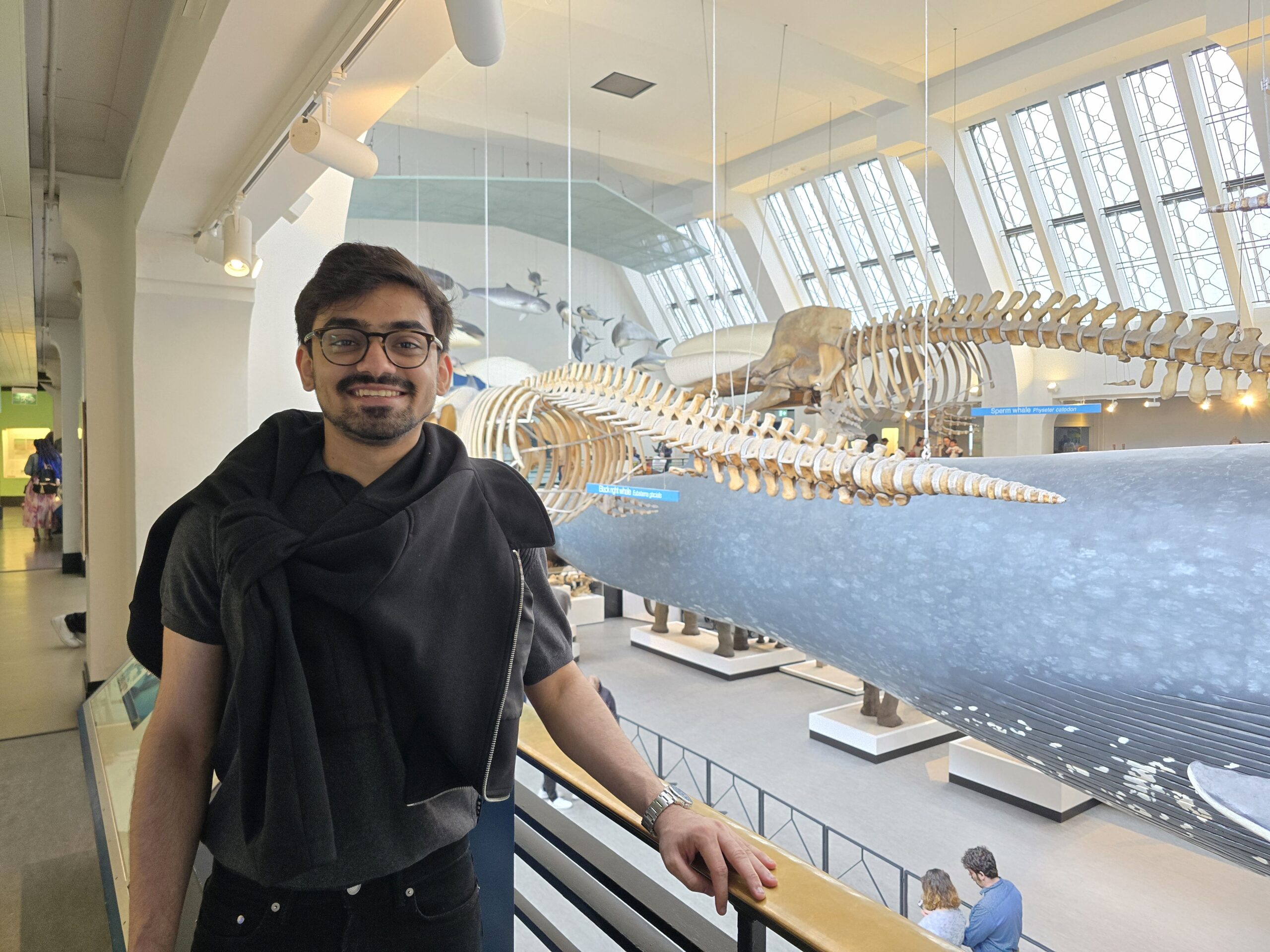
Pranay Maniar secured full-time employment quickly after graduating from City St George’s MA International Journalism
It’s an observation echoed by Pranay Maniar, who moved to the UK from India to study the MA International Journalism at City St George’s after working in Mumbai for two years for titles including the Indian Express and Free Press Journal.
“The amount of passion the people had around me, [and] the amount of effort our professors put in for us to get things right and for us to become flawless in our field, it was quite beautiful for me,” he says. “I use all these same practices they have taught me over this one year.”
Pranay was recommended City St George’s by a relative in London who had previously worked for the BBC. “He said: ‘This university is great because [it’s] known very well in journalism circles, but mainly it’s in London, and London gives you better networking opportunities. It’s a more diverse classroom.” In short, when researching prospective courses, students should ask questions about alumni, networks and the faculty’s connections.
What About The Job Prospects?
City St George’s is known for its strong network and alumni, meanings that all students benefit from being associated with the university. While not universally applicable, students at City St George’s are encouraged to find work experience during their course and to make good use of City’s extensive alumni network that covers most major media outlets. Intersecting with her niche of food, Mallory did work experience at Tesco Magazine and The Drinks Business; meanwhile, Pranay did financial newsletters for a startup. He says that City St George’s helps put students in a strong position.
“You do a bunch of networking every week. There is a new guest speaker coming to the university [and] you can talk to them through email or LinkedIn and show them your portfolio,” he says. “A lot of my classmates, I believe, have done that and gotten internships or jobs.”
Some elective courses also have field visits. Pranay recalls, “We went to the BBC studio, Sky studio, the Houses of Parliament, the Bank of England. Those places are great places to network.”
For the year 2026-27, City is going one step further by introducing their new Employability and Career Development: Work Experience, and Freelancing and Industry Project module. Zahera says that City St George’s spends a lot of time preparing students for the world of work and that the department also gets direct requests from media outlets.