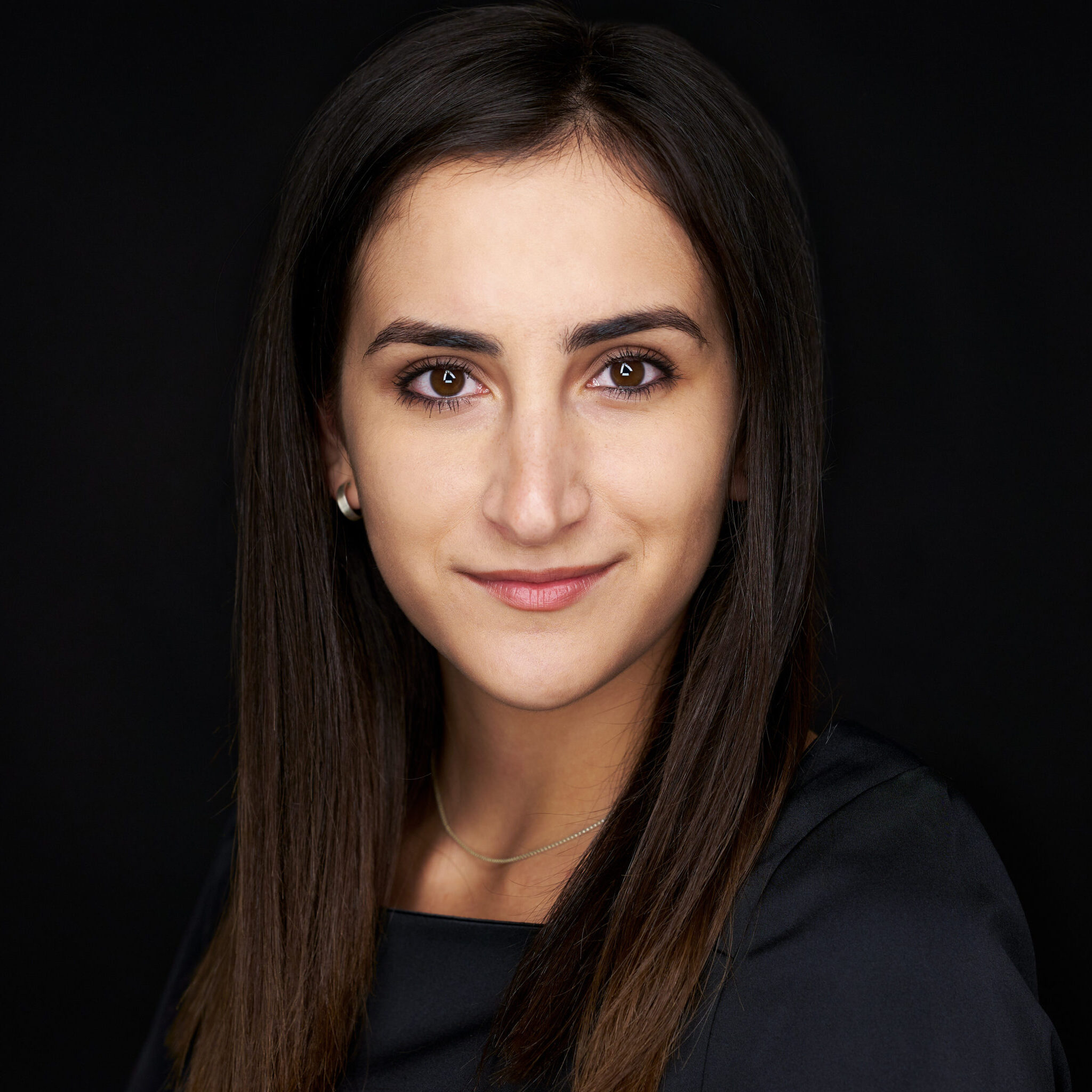
Nia Simeonova is a reporter intern at Dow Jones’s energy unit OPIS, covering carbon markets and hydrogen. She has previously published with The Times and Sunday Times. She was the Editor-in-Chief of Roar News, the 50-year-old student publication of King’s College London. Her experience covers everything from culture and education to politics and energy.


March 23, 2026 (Updated )
With a keen eye for influencer trends and a passion for long-form features, Serafina Kenny is a freelance health writer for Immediate Media who previously worked as a junior health reporter at Business Insider. She covers everything from health news and wellness trends to sex and relationships. Her dissertation on Victorian porn helped her launch her journalism career – proof that you really need to lean into your unique interests.
You’re most likely to spot her at a university talk or browsing the shelves of a London bookshop, but we caught up with her at the Student Publication Association‘s National Conference 2025 to learn about a day in the life of a freelance health writer.
What is the first thing you look at when you wake up?
Probably Instagram. I just need to see something to force my brain to wake up. It used to be Twitter (now X) but I’ve come off of that recently. It’s just not worth it anymore. I actually don’t read any news until 9am.
Tell us about your morning routine.
We start with a half-hour news sweep every morning. I have a few sites where I check for any breaking stories we need to hit. It’s really useful to see if there are new trends in the health world. It’s also just a nice way to start the day by doing some reading.
I put together little lists for my editor and then also send her all the stories I’ve got ready to go. She sends me a brief and then I will get writing in the morning. She’ll normally give me an end-of-day deadline. It’s not like we have to write seven pieces or anything like that here. So, it’s quite nice. But I normally do my admin stuff in the morning just because I am not a morning person. For me, it’s better to get all the little tasks out of the way before I can actually start writing.

"I did a week's work experience at Women's Health at the beginning of my Master's year. I had met the editor at a Women in Media conference panel I chaired and we went for a coffee after. I was really nervous and I asked her for work experience. She was lovely."
Serafina Kenny, Freelance Journalist
Have you always thought you would be a journalist?
No, I didn’t really think about it until the first year of uni. Writing has been something that I’m quite good at. As a child, I always wanted to be a writer (it was a mad scientist for a bit as well, but hey, that was a blip.)
At uni I got involved with the student newspaper quite early on, just to do some writing. And then lockdown hit. I don’t know why but I decided to go absolutely HAM into researching journalism. So, I attended a bunch of seminars, started looking at Journo Resources stuff – it’s been with me for the whole journey. I got really knowledgeable about it and it just spiralled from there. I never considered anything else.
You are a a freelance health writer and previously a junior health correspondent for Business Insider. How did you end up in health journalism?
I was a features and opinion editor at uni, so it had nothing to do with health, but I have always been really interested in Black feminism and gender studies. I did English Literature and History for my undergrad, but always ended up writing about feminism, women and sexuality. Then, I ended up doing a Master’s in Gender, Sexuality and Culture.
Then, I did a week’s work experience at Women’s Health at the beginning of my Master’s year. I had met the editor at a Women in Media conference panel I chaired and we went for a coffee after. I was really nervous and I asked her for work experience. She was lovely.
So, I think it was due to the fact that I could talk about the aspects of gender and was knowledgeable about sexuality. It was not a decision I ever specifically made. You know what the industry’s like – you take what you can get.
Although it’s not something I specifically set out to do, I do find it interesting, especially since it intersects with the cultural sides of race, gender, sexuality and politics.
Want To Delve Into The Daily Lives Of More Journalists?
We’ve interviewed dozens of people about their jobs, getting into the industry, and what they might do differently. Here are just a few:
• Naryan Branch, Production Journalist at ITV News
• Nuala McGovern, BBC Broadcaster
• George Greenwood, Investigations Reporter at The Times
• Josh Barrie, Food and Drink Writer at The Standard
• Martin Booth, Editor at Bristol24/7
• Megan Wallace, UK Editor at the Gay Times
• Georgina Quach, Newsletter Editor at the Financial Times
• Dan Cody, SEO Editor at The Evening Standard
• Josh Sandiford, Journalist at BBC Midlands
• Louisa Wells, Head Of Podcasts, The Telegraph
• Carla Jenkins, Social Media Journalist, The Times Scotland
• Lukanyo Mnyanda, Scotland Correspondent at The Financial Times
• Laura Webster, Editor at The National
• Severin Carrell, Scotland Editor at The Guardian
Is there something that you would change in the way that women’s health is reported on?
I think there just needs to be more of it, to be honest. It’s covered a lot more now, but it’s seen as something so different and radical, even though it shouldn’t be. But that’s less of a reporting issue and more of a medical institution issue. People need to know what’s going on. Certain issues need to be publicised, like if you’ve got hormone issues or you’re struggling to conceive. There should be awareness of the fact that all these things are normal.
What is the most memorable story you have ever worked on?
Can I do what I’m currently writing? It’s a feature about the business of breakups I’ve been writing for quite a while. Influencer breakups, even though they’re quite an emotional, personal turmoil, can help with profits and business. I’m really proud of that because I’ve not seen anyone write about this yet. It’s a very heavily interviewed piece. It’s quite an exciting area. I find influencer culture absolutely fascinating because of how crazy and foreign it is. To identify the trend and link it with health and relationships coverage has been quite fun.
If you could go on holiday tomorrow, where would you go?
My brain just went ‘Italy’ because I love it. But I’ve been a few times already. I’ve never been outside of Europe. So I’m gonna say Brazil. I’ve just seen so many beautiful pictures of it everywhere. Carnival would be really fun and the beaches look absolutely beautiful. And I feel like the food would be great, too!
What made you decide to go freelance?
Being at Business Insider was a really good start to my career and I’ve learned a lot but I’ve always been a bit of a jack of all trades. So, I’m interested in a wide variety of things and I wanted to be able to write features and more heavily reported things on topics that are a bit wider than what they covered.
It’s been a decision that was long-time coming and I am very aware that freelancing is rough. A lot of people on social media talk about how hard freelancing is, so it’s going to be a bit of a jump for sure but I’m excited to be my own driver of articles. I want to pitch things I’m interested in and expand what I’m writing about. I’ve got quite a few ideas, so I’m excited. It should be quite fun.
"Have your own interests. Get experience where you can. And doing student media was definitely a help for me. I almost wish I had freelanced a bit harder at uni. I had three [bylines] by the time I was applying, which was a help for [being hired by] Business Insider."
Serafina Kenny, Freelance Journalist
What would you tell people who want to follow in your footsteps? How can they stand out from the crowd?
Have your own interests. I think my degree and my interest in sexuality and gender helped me to get this job. For me, my degree was proof that I had written about that sort of thing before. And it was something interesting to talk about in the interview as well. When I was interviewing for Business Insider, to be able to say I was writing a dissertation on Victorian porn, it’s quite memorable! People remember that because it’s weird. And it’s quite an interesting thing to be able to talk about.
Get experience where you can. I’d say it’s hard. And doing student media was definitely a help for me. I almost wish I had freelanced a bit harder at uni. I think that having professional bylines can help. I had three by the time I was applying, which was a help for Business Insider. But student journalism is never a bad thing to be doing.
Last question – what do you do after work?
I go to a lot of talks. It’s really weird but I like going to universities and bookshops. I love a talk, it’s become a bit of a meme among my friends that I’m always at a talk! So I go to the London School of Economics, Housmans Bookshop, the London Review Bookshop, the Courtauld Institute. It’s really good to learn about things I’m already interested in and expand my worldview on things. I also go swimming every week with my friends. Other than that, I just hang out with my friends and my boyfriend, really.