Minna is a writer and stand-up comedian originally from Somerset and currently living in Nottingham. Her work extends from creative writing and performing poetry, plays, and stand-up comedy to campaigning work in the charity sector, most recently with pacifist organisation, Peace Pledge Union.


November 3, 2025 (Updated )
Anyone can start a podcast — all you need is a decent microphone and some YouTube tutorials on editing audio and you’re set. Over the past two decades, podcasting has democratised audio content. However, the same lack of regulation that makes it so easy to put out a podcast has created an anarchic atmosphere. As long as you’re not breaking the law, anything goes.
Meanwhile, the appetite for true crime has rocketed, ranking as the second most popular category at the British Podcast Awards Hot 100 in 2023. But can podcasters with no journalism background take the necessary ethical considerations when discussing the worst day of a stranger’s life? And who should be tasked to regulate it all?
A Growing Market, From Serial to RedHanded
It’s been a decade since Sarah Koenig’s Serial, about the 1999 murder of Hae Min Lee, changed the podcast landscape forever. Produced by the experienced journalists behind This American Life, it was downloaded 300 million times. Countless other newsrooms have since launched shows. Some seek to question convictions, like New Hampshire Public Radio’s Bear Brook, while others expose con artists, like Tortoise’s Sweet Bobby.
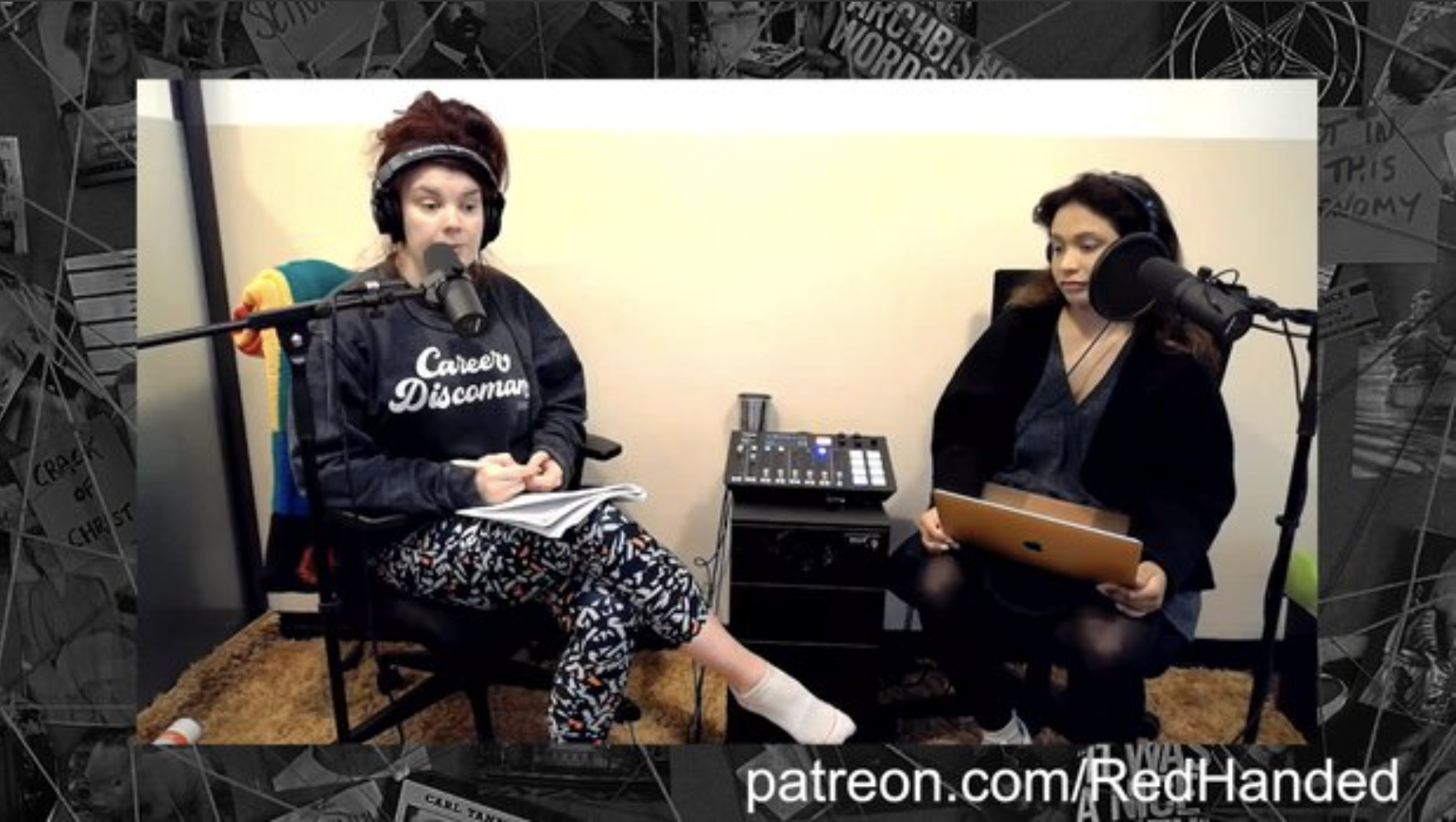
And, of course, in an era of deregulation, true crime podcasts have spread beyond newsrooms. RedHanded is hosted by Hannah Maguire (previously a teacher) and Suruthi Bala (who worked in events) and dissects a new case each week. The pair have won multiple awards and even penned a Sunday Times bestseller — but also came under fire in 2021 after referring to the Hillsborough disaster as the result of “football hooliganism”. The 97 deaths were caused by police failings.
It’s impossible to say for sure if these errors would have been caught in a newsroom, but, for some, it’s emblematic of a wider problem. “It brought into focus for me that we really do live in an era where the media allows opinions to be taken as fact and rarely held accountable – and in particular in the true crime genre,” wrote Xander Ross, the co-founder of TV and entertainment PR agency Percy & Warren.
Published ahead of a Royal Television Society debate on the issue, he continues: “There are countless similar shows to RedHanded, many with a huge volume of episodes, which makes you begin to wonder how often content creators are making these mistakes – disingenuous or not. Where is the journalistic rigour?”
How Should Podcasts Be Regulated?
Accuracy is a key tenet of ethical reporting and, in newsrooms, there are several external safeguards in place. For journalists, ethics aren’t just about individual morals, but established rules of working life. Had Hannah and Suruthi been broadcasting on television or radio, they would have been regulated by Ofcom. The mandatory ethics code for broadcasters includes a section about impartiality and accuracy. This states that “news, in whatever form, must be reported with due accuracy and presented with due impartiality”. It adds that significant mistakes should normally be acknowledged and corrected on air quickly.
Similarly, had the pair been writing for a news outlet, the chances are they’d have been regulated by IPSO or IMPRESS. While both bodies are voluntary, together they regulate more than 2,000 titles across the UK who agree to abide by a code of conduct covering accuracy, privacy, and the reporting of crime. Should a publisher regulated by any of the three bodies breach the code, they can be subject to a range of sanctions.

“There are countless similar shows to RedHanded, many with a huge volume of episodes, which makes you begin to wonder how often content creators are making these mistakes – disingenuous or not. Where is the journalistic rigour?”
Xander Ross, co-founder of TV and entertainment PR agency Percy & Warren
For their part, RedHanded issued a 26-minute apology saying Suruthi spoke “incredibly sloppily and incredibly recklessly about something I was massively ignorant about,” that they had removed the reference since researching and “were just learning about these things”. However, the fact remains that it’s highly unlikely that many self-started podcasts have considered regulation or best practice codes at all.
‘Accuracy Is What I’m Most Proud Of’
But to say all independent podcasters ignore best practices would be untrue. Naomi Channel works as a TV producer by day and at night creates her podcast REAL, which she describes as “audio documentaries done with the victims in the heart of each episode”. She’s a journalist by trade and indeed teaches journalists at Harlow College, where she reminds her students that “Wikipedia is not a reputable source.”
She says that accuracy in her work is “probably what I’m most proud of” and that best practice guidelines are “ingrained” in her. “I have to adhere to OFCOM anyway for my work in TV,” she explains. “So, I may as well [adhere] to that in podcasting”. For Naomi, REAL has a larger aim than simply titillating audiences. “I just don’t see a place for laughter — I want to help people”.
Louise Tickle has a similar motivation; her reporting as a journalist centres around child welfare, family courts and violence against women and girls. Along with five other journalists, she released a four-part podcast series with Tortoise Media titled Hidden Homicides. The six months of investigation tell the stories of numerous women who died in sudden or unexplained circumstances — but one story didn’t make it in.
“Your job as a journalist is to be selective for a reason,” says Louise, who believes all journalists should question what will be learned by telling someone’s story. She describes a tough call by her editor to remove a story from a woman in “deep grief”, as they didn’t have the time to do it proper justice. With the benefit of hindsight, she agrees this was the right decision — and one she believes was easier to make with the support from a bigger newsroom, with colleagues who can give an outside perspective from the emotional interviews she was conducting.


Journalist Louise Tickle (L) creator of true crime podcast, Hidden Homicides, and IMPRESS chief executive Lexie Kirkconnell-Kawana (R).
A lack of resources — from legal teams to a second pair of eyes — is something Namoi is acutely aware of. While she’s often approached by families to tell their loved one’s stories, as she’s creating and researching alone, she can only do so much. Similarly, she agrees that it currently rests on individual podcasters to decide their own ethics: “It’s a bit like asking people to judge their own moral compass, isn’t it?”
For Lexie Kirkconnell-Kawana, chief executive of IMPRESS, there are three questions that need to be answered before regulation could happen. “Firstly,” she asks, “would being regulated build better trust with your audience?” Or in other words, is there an incentive for podcasters to sign up? Secondly, how would you reach all podcast creators, a group she describes as “disaggregated”? Finally, and perhaps more poignantly, she asks if podcast creators think they need to be regulated at all.
A Move Towards Regulation?
It’s a big question but there are already signs the answer might be yes. Launched in 2023, the Association of True Crime Producers (ATCP) is a group of 25 independent TV, film and audio production companies that seek to “enhance current guidelines” around true crime coverage. Each member commits to “the highest ethical standards”, written out in 13 guidelines.
These include “respecting the privacy and dignity of the victims and their families”, “ensuring that [the victims and families] are protected from any further harm or trauma”, and “ensuring that the programme is fair, accurate, and unbiased”. The ATCP isn’t a regulator — so they don’t take complaints and can’t sanction members for a breach — they do work closely with broadcasters and endorse the Ofcom code.
Objective oversight, whether from editors, colleagues, or a collective regulatory body, has long been seen as one of the ethical guardrails of journalism. But while it might be time for the independent podcasting sector to embrace regulation, it might also be time for journalists to realise that self-regulation means coming from podcasters themselves.