Supported content from City St George's, University of London Journalism Department

April 1, 2026 (Updated )

What do you think of when the word ‘finance’ is mentioned? Most likely, you will either fist-pump at number crunching or break out into a cold sweat. However, when it comes to journalism, finance is so much more than data – it is central to our universal understanding of the world.

There are many misconceptions about business and financial journalism. As the Marjorie Deane Professor of Financial Journalism at City St George’s, University of London, Jane Martinson says that potential applicants of the university’s MA in Global Financial Journalism can have misunderstandings about the course.

“I’m often asked whether you need a maths degree, which you absolutely do not. Some think [Financial Journalism] is an economics course, which it also isn’t.” Jane says the MA isn’t about in-depth finance, but how to find stories that impact people and hold power to account. “How to find stories in accounts, how to look at the ramifications of an interest rate change – those kinds of big picture things. They’re not a detailed analysis of economics.”

When Jane talks of the ‘big picture’, she’s referring to the way money intersects in our daily lives. From your daily commute to the cost of living, the cost of war to the net worth of chart-topping pop stars, financial journalism encompasses domestic and international markets, tech, personal finance, careers, and even the arts, meaning that it can bring vital context to any subject. The potential for finding a riveting story is endless.

Who Should Study Financial Journalism?

Mari Nøvik, is an alumni of City St George’s MA Global Financial Journalism who secured an internship at the Wall Street Journal and now works as a reporter at the Financial Times. While Mari did come from an economics background, studying the subject as an undergraduate, she wanted to further her knowledge on financial journalism after working as a journalist in Norway. Since graduating, Mari has written about everything from ongoing Brexit and EU trade deals, the political ripples of the Epstein files, to AI-generated attacks against women online.

“I really wanted to work in international journalism, and was very much drawn to this course because it was only one year and seemed to have an amazing reputation,” Mari says. “There were lecturers that have been working for some of the best business papers in the world – lecturers from the Financial Times, Bloomberg, CNBC. They also arrange two trips every year, one to Singapore and one trip to the US.”

While Mari had a background in economics, it is not a prerequisite for studying the course. Harry Black also studied MA Global Financial Journalism and now works at Bloomberg as a rotational reporter. However, he applied to the course not coming from a STEM background.

Journo Resources
Journo Resources

Jane Matinson, Marjorie Deane Professor of Financial Journalism at City St George’s (L) and Harry Black, MA Global Financial Journalism alumni and reporter at Bloomberg (R)

“My undergrad was in French and Spanish, so I was a bit worried at the time that it was going to be a step up from what I’ve known already,” he says. “But if you have a deep, ingrained curiosity, you’ll thrive. The point, I think, of journalists, is to ask the stupid questions in the room so that people reading your articles don’t have to.”

In fact, although Jane, an English graduate, got her first national newspaper job on the Financial Times, she spent most of her career working at the Guardian in jobs ranging from US business correspondent in New York to women’s editor via several jobs writing about the media.

Jane emphasises that students on the course come from many different backgrounds, just like Harry and herself. “We have journalists in any field, whether that’s financial, arts, or culture.” She adds that the current editor of the Financial Times, Roula Khalaf, completed a Master’s in international affairs from Columbia University.

“I wouldn’t say there was an ‘ideal financial journalist’,” Jane continues. “But I think, in terms of ideal journalist, you need to have endless curiosity, like talking to people, and have the tenacity to keep trying, which is, I think, what all journalists should have.”

Harry advises that, if you’re going to study the MA, to just get stuck into it. “It’s the last time in your life, probably, that you’re going to have so much time to dedicate to owning that craft. In my undergrad, I was in the library all the time, but with [the MA], I was always out reporting, finding new stories. If you do that, you’ll realise by the end of your year you’ve become a fully fledged journalist.”

So, What Do Prospective Students Need To Know?

Well, City St George’s MA Global Financial Journalism takes 12 months to complete when studying full-time, or 24 months if you opt for the part-time route. The course is structured to give students a grounding in basic journalism skills including news reporting, feature writing, video, and audio.

Students take part in nine modules, including the course-specific modules on the fundamentals of financial journalism, reporting on companies and markets, reporting on the global economy, as well as finding stories in data – all of which Jane describes as the “gold standard” of what you need to work at employers like the Financial Times, Reuters, or Bloomberg.

So, Where Have City St George's Alumni Gone On To Work?

Over 6,000 City St George’s Journalism alumni are working as reporters, broadcasters, anchors, feature writers, and in many other roles both in the UK and at publications abroad.

Notable alumni include:

• Chris Mason, BBC Political Editor;

• Dolly Alderton, Author and Sunday Times columnist;

• Sophie Raworth, BBC News presenter;

• Zing Tsjeng, i-Paper columnist and former Editor-in-Chief at Vice UK;

• Charlie Brinkhurst-Cuff, award-winning founder of gal-dem and former Senior Editor at the New York Times; 

• James Ball, Political Editor at The New World and former Global Editor at The Bureau of Investigative Journalism;

And many more! It’s safe to say you’ll be in good company.

While these course modules will enhance your knowledge of the subject, Mari emphasises that the course instills the commitment of the newsroom with realistic deadlines.

“It might be [about a] company, it might be energy. It was different patches every week, and then you had to produce one news story from each of these different modules every week,” Mari says. By the end of the course, students leave with a portfolio of graded work including news, stories, features, and TV packages. “It is a great way to do it because it’s very similar to what you actually do when you’re working.”

She adds that some of the courses can feel quite technical, so some basic knowledge of global affairs and how economics can influence international relations can be helpful. “We did one module on China and the US. These are very intertwined with what is going on with the economy of these countries, such as the Federal Reserve, or the People’s Bank of China.”

This year, students will also take the new modules Career Development: Work Experience, Freelancing and Industry Projects, and AI Journalism and the Future of News to better prepare them for entering the swiftly changing industry.

“We can’t pretend AI is not happening,” Jane says. “So, we want to make sure we, our students, our graduates, have the right toolkit to know how to use it effectively and ethically for their future career.”

Classes for MA Global Financial Journalism are small, with an average of 20 students. However, this lends itself to learning, with a combination of lectures, seminars, and hands-on workshops. With a lot of contact hours, the idea is to replicate a newsroom environment in as safe a space as possible to prepare students for the workplace.

Mari’s favourite part of her MA was her final project where she and a fellow student travelled to the Shetland Islands to make a ten-minute documentary on how the residents were transitioning from oil dependency to being fully reliant on clean energy sources, and using the skills they had learned during the course. “We spent almost a week up there filming, talking to people. It was fantastic.”

Meanwhile, Harry completed his while travelling. “I ended up doing my final project while I was in Australia, on the Australian housing crisis,” he says. “That was a 4,000- 5,000 word feature. It was fun doing on-the-ground reporting that you’re not familiar with.”

How To Make The Most Of My Application?

So, how do you make the most of your application to secure your spot on the MA?

First, you’ll need to dig out your final transcript to show completion of your undergraduate degree and prove you hold at least a 2:1. You’ll then have to write your personal statement to explain your interest in the course. You may not have written a personal statement since applying through UCAS; if so, remember to share how the MA will feed into your future career plans, highlight any professional or academic experience you have, and demonstrate your commitment to journalism.

Journo Resources
“I wouldn’t say there was an ‘ideal' financial journalist. But I think, in terms of ideal journalist, you need to have endless curiosity, like talking to people, and have the tenacity to keep trying, which is, I think, what all journalists should have.”
Jane Matinson, Marjorie Deane Professor of Financial Journalism at City St George’s, University of London

Plus, if you’re an international student, you’ll need to prove your proficiency in English so as to keep up with lessons. With Norwegian as her first language, Mari recalls “sending in a portfolio where I had to translate a bunch of my recent work into English. I had to do an English test before, like IELTS.” She also found that the way of structuring an article was different in the UK or US compared to Norway. “It was very different from the way I was used to working.”

An MA in Global Financial Journalism studied full-time over 12 months currently costs £13,000 for UK students and £26,680 for international students. However, those in need of financial support can apply for the Marjorie Deane Financial Journalism Foundation Scholarship upon being offered a place on the course.

Harry was a recipient of the Marjorie Deane Foundation’s scholarship and recalls it being one less stress not having to worry as much about money. He says that “[if I hadn’t gotten it], it probably would have hampered my ability to solely focus on journalism, just because of living in London. I think it gave me confidence and it was a sign that someone knew that I could do it.”

There are two scholarships available to one home student and one international student covering the full course fee, with applicants needing to be able to demonstrate both professional potential and financial need. To date, the foundation also covers flights and accommodation costs for all students on the course to take part on trips to New York and Singapore. “Students have to cover their living expenses,” Jane says.

Making The Most Of The Experience

The MA Global Financial Journalism’s annual class trips to Singapore and New York prove an unforgettable experience for students who get to see how global financial centres outside of London, where City St George’s is based, work first-hand.

“The trips are incredible,” Jane says. “In Singapore, we visited international newsrooms, think tanks, the SGX exchange and more to talk about market impacts and China’s impact on global trade. We then go to New York and we do the same; we go to the FT, the Guardian, Bloomberg, Reuters. We had someone from the Federal Reserve last year, which was brilliant, so, yes – pretty full on.”

The trips also include time at the National University of Singapore and New York University, with those present learning how lecturers and students in these institutions perceive the financial markets in their own regions.

“We met lecturers who were telling us about how hard it is to do journalism in Singapore. We had certain courses at the university and we also met some students who did a journalism degree, which was interesting and fun,” says Mari. “Then we did the same in New York. It really inspired you to think about coming to one of these big cities to do journalism.”

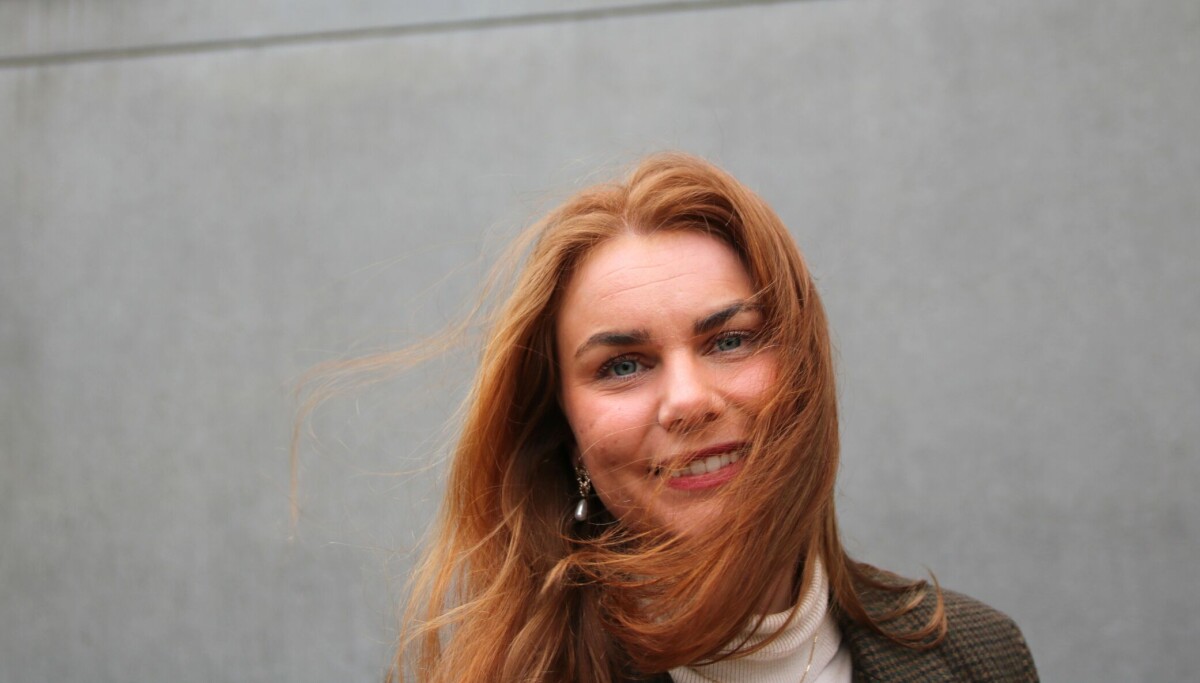
Mari Nøvik, MA Global Financial Journalism alumni who now works for the Financial Times.

Mari says that meeting current journalists when you’re studying is very inspiring to see what you can achieve, as well as your options in the industry, which can often be competitive. One thing that City St George’s prioritises is preparing students for the workplace and providing them with opportunities to network and make connections in the industry; their alumni network regularly helps students to secure work experience opportunities during Christmas and Easter holidays.

“I did a week’s placement at the Times’ business desk, which City St George’s helped me get over the Christmas break,” says Harry. “It was really fun. I saw my name in print for the first time.” He then went on to do a ten-week internship with Bloomberg the following summer, which led to him landing a place on their graduate scheme.

Mari recalls applying for many opportunities before securing a summer internship at the Wall Street Journal and working from their New York office. “The truth is it’s really hard. I continued freelancing a little bit for them and I covered energy, as I had worked as an energy reporter before in Norway. After I had that job for a couple of months, it was easier for me to apply to other jobs.” Mari managed to secure work with the i Paper before getting a job with the Financial Times, where she has been for almost two years.

Jane emphases the importance of doing work experience and keeping up with any contacts that you make along the way, which is why City St George’s hosts many guest speakers and networking events for students to get involved with, with previous speakers including Alan Smith from the Financial Times and Chris Moran, Head of Editorial Innovation at the Guardian. Her advice? “Be persistent – keep going. See what opportunities are out there and could fit.”

And Mari reinforces that the importance of networking has been an invaluable lesson. “All the tutors and lecturers at City St George’s who had this experience taught me that this is so much more about playing the long game and building relationships that you know are trustworthy. That is much more important than fine-turning your adjectives and finding the correct sentence.”

More Than Just The Money

In a time of massive uncertainty, the need to understand the social and political implications of the economy is becoming increasingly important, especially with the advent of cryptocurrencies and international tech giants becoming more influential on policy and governance. For Jane, the world has never needed financial and business journalism more.

“This is about entrenched behaviours and people with lots of money behaving as if they are above the law. We need to understand where that money is coming from and how it is being used. This is about people and power, which drive the world.”

She adds that we are only just now realising the significance of the 2008 financial crisis in regards to how the world has changed since, as well as transatlantic geopolitics. “‘Follow the money’. It’s not only really important, but it’s also a great source of really good, interesting stories.”

City St George's, Journalism Department

Wherever you are in the world, on any given day you are likely to see, hear or read journalism from graduates of City’s Department of Journalism.

Each year hundreds of people from diverse backgrounds apply to us who want the best education to enable them to get a great job in the media.

Here at City, we provide an intense and highly focused education to help you acquire the up-to-date journalism skills needed to enter your chosen area of the media.

Kayleigh Watson
Kayleigh Watson

Kayleigh Watson is the deputy editor and head of content at Journo Resources. She manages our fellowship, areas of membership, and writes various advice-focused pieces for the Journo Resources website.

Join Our Events For Free And Support Our Work With JR Membership