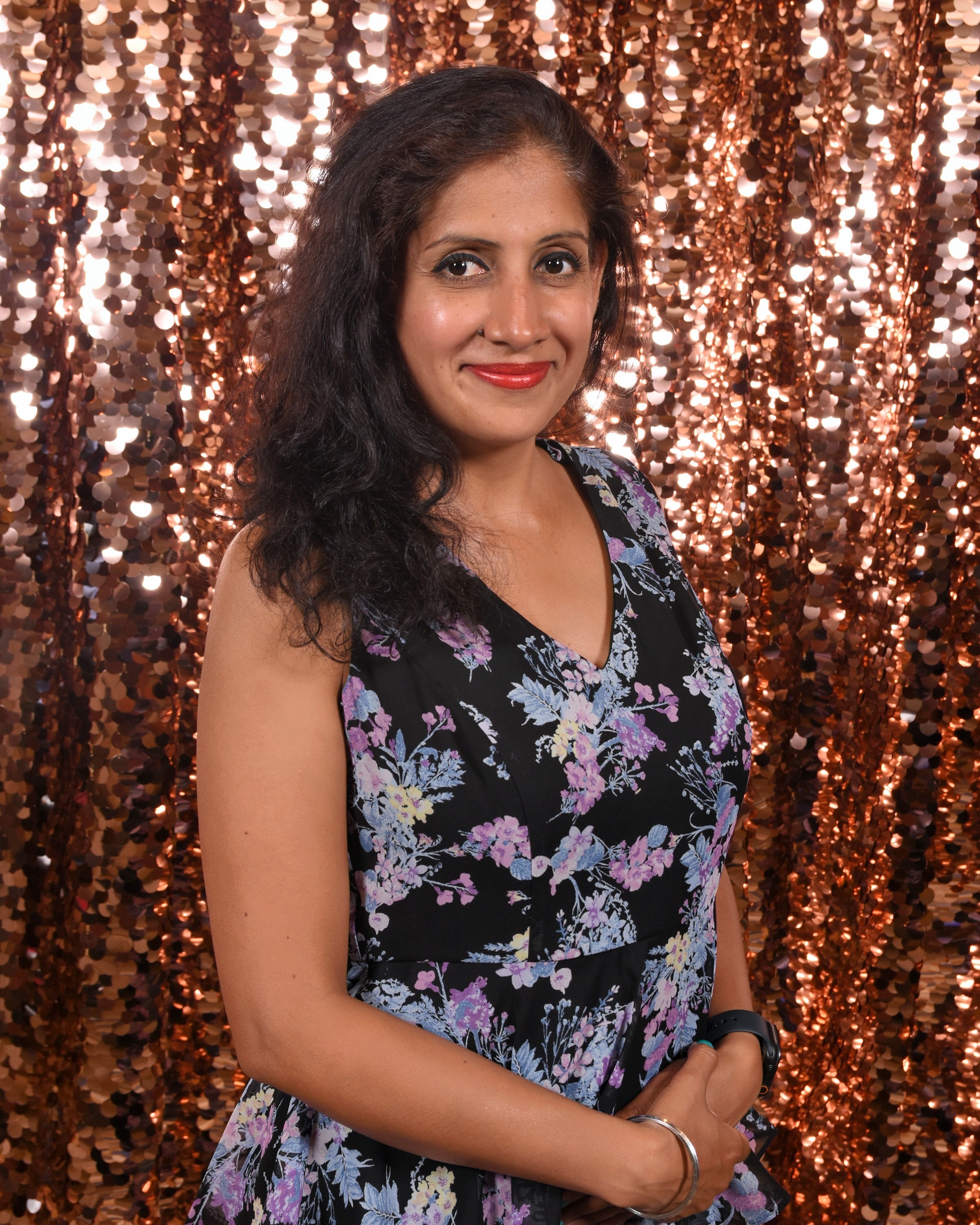
Minreet Kaur is an award-winning journalist specialising in features on South Asian communities, carers, religion, health, and travel. She is passionate about amplifying underrepresented voices and telling stories rooted in lived experience. She has written for The Guardian, The Independent, Metro, BBC, Sky News, Telegraph, The Times, iPaper. She is also a swimming teacher and run leader and started a run club called Asian Women Run to help get her community active and create a safe place for them to help help representation in the sport and create a global movement so people become healthier and happier through exercise.


February 24, 2026 (Updated )
My mornings start long before my workday does. Before I can think about pitching or writing, I’m checking my mum’s appointment schedule, sorting through hospital letters, reviewing her medication, and booking or rescheduling her next appointment. My dad doesn’t feel comfortable driving, so every trip, every errand, and every hospital visit falls to me.
My parents are also immigrants, which has made it harder for them to learn about new technology, smartphones, and administration in the UK. So, I manage their banking and all the household bills. They rely on me for everything — and it’s tough.
As a Sikh woman in her 40s, a freelance journalist, and a full-time carer to elderly parents. I balance caring, managing the household, and trying to sustain a career in journalism. There’s rarely a moment left for myself — and I feel drained.
Juggling Caring And Freelancing
The media talks a lot about diversity and inclusion. It talks about gender, race, disability, sexuality, and class — but carers like myself are rarely mentioned. Unlike the aforementioned, caring isn’t a protected characteristic under the Equality Act 2010, but it shapes people’s working lives just as profoundly. For many of us, especially women of colour in midlife, it’s a quiet struggle that leaves us feeling unseen in a fast-paced industry that thrives on visibility.
According to Carers UK, 10 per cent of women and girls in England and Wales are providing unpaid care — nearly three million in total — and of the five million people providing unpaid care in England and Wales, 59 per cent are female. Some 500,000 of these women are of an ethnic minority background.
Culturally, in many South Asian families, caring is simply expected — an act of love, not labour. It’s what good daughters do. But, in journalism, silence about being a carer can make you feel invisible when it comes to landing work. Freelancing relies on being visible: pitching, networking, staying on editors’ radars. When your energy is divided and your hours are unpredictable, it’s easy to disappear from these spaces.


Josh Toovey, senior research and policy officer at IPSE (L) and freelance journalist and carer, Sonja Morgenstern (R)
I often worry that editors might see me as unreliable for commissioning and filing copy on time if they knew how much I do behind the scenes. Feeling the need to keep up appearances is very real, so, like many carers, I overcompensate — working through exhaustion to prove I can still meet every deadline. But the cost of that invisibility is my own burnout.
Too often, carers internalise the idea that we’re ‘less than’; less flexible, less ambitious, less available. But the truth is, carers are constantly juggling, adapting, and problem-solving. We carry emotional weight and practical chaos every single day — and still show up.
No Two Caring Experiences Are The Same
Sonja Morgenstern is also a freelance journalist and carer for her disabled son. She’s been writing since 2017, while also managing a Lutheran cemetery as her day job. “I barely get anything done during school holidays, even if my kid is in a programme or with a babysitter,” she says.
“Deadlines help me structure a network around my son, but getting into the right headspace for pitching or writing takes effort and is often left to one side. I feel like I’m surfing a surface wave, with a bunch of stuff desperate to burst out underneath.
“Getting distracted by phone calls from the school, therapists, contact with his assistant and their provider, and health insurance providers makes it really difficult to start projects and stay in the flow. Often, other priorities take over. I’m on antidepressants and HRT, and, most days, I just try to muddle through.”
Navigating freelance journalism while being a carer is far from easy. These are a few lessons Minaret has learned along the way:
• Be honest, not apologetic. When editors are understanding, it helps to set boundaries early. Transparency builds trust.
• Redefine productivity. Some weeks you’re writing; others, you’re just holding things together. Both matter.
• Find solidarity. There are other carers quietly doing this work. Online groups, mentoring schemes, and peer support can help ease the isolation.
• Recognise your worth. Caring doesn’t make you less professional — it makes you deeply human.
Sonja feels like opportunities pass her by because she can’t always respond to calls for pitches in time, concentrate enough to get the words on the page, and feels unable to explain her circumstances when emails are usually so brief.
She adds: “I have a day job that I’m often late to, depending on issues with my son’s transport and just getting myself together in the morning. I also run a casting business, which I feel is taking the biggest hit. Unfortunately, I’m not writing as much as I’d like to.”
“Self-employed Carers Are Left Feeling Unseen And Unheard”
Josh Toovey, senior research and policy officer at IPSE (The Association of Independent Professionals and the Self-Employed), says this invisibility isn’t just a personal struggle — it’s structural.
He explains: “Far too often, self-employed carers are left feeling unseen and unheard. It’s tough enough managing the ups and downs of freelance life, but when you’re also caring for someone, the challenges multiply. Our research shows that one in five freelancers has unpaid caring duties — yet there’s a glaring lack of recognition and tailored support for them.
“It’s vital that policymakers understand the unique challenges faced by carers in the self-employed community, and IPSE will continue to make the case for better representation and support for this overlooked group.”
That lack of recognition extends beyond policy — it reaches journalism itself. While progress has been made in supporting disabled people or parents of young children, carers, and particularly those looking after adults or elderly relatives, are too often left out of workplace conversations because they don’t fit neatly into existing diversity categories.
Yet visibility doesn’t have to mean exposure. It can mean honesty: setting boundaries, asking for flexibility, and framing caring as a strength rather than a weakness. Carers develop skills that every newsroom should value: crisis management, empathy, multitasking, and perspective.

"Self-employed carers are left feeling unseen and unheard. Our research shows that one in five freelancers has unpaid caring duties — yet there’s a glaring lack of recognition and tailored support for them."
Josh Toovey, senior research and policy officer at IPSE
“What’s often overlooked,” Josh adds, “is the toll this takes on mental health. The emotional strain of juggling unpredictable freelance work with the constant demands of caring responsibilities can be overwhelming. Many carers report feelings of isolation, anxiety, and burnout. Without access to employer support structures or flexible leave, self-employed carers are left to navigate these pressures alone.”
Josh says that IPSE’s wider research into freelancer wellbeing shows that, while self-employment can offer flexibility, it also brings significant emotional challenges. “For carers, this is compounded by the lack of financial security and the absence of formal support networks. IPSE will continue to make the case for better representation, mental health support, and recognition for this overlooked group.”
Carers bring a unique perspective to journalism. They understand resilience, empathy, and how to hold multiple truths at once. They see the gaps in systems, the quiet stories behind statistics, and the humanity behind policy.
If journalism truly wants to reflect the world it reports on, it must include carers in its diversity frameworks. That means flexible deadlines, inclusive commissioning practices, support with job applications, and mentorship programmes that account for carers’ realities — especially for midlife women and people of colour who are too often sidelined.
Caring shouldn’t make you invisible in journalism. It should make you invaluable.