Nia Simeonova is a reporter intern at Dow Jones’s energy unit OPIS, covering carbon markets and hydrogen. She has previously published with The Times and Sunday Times. She was the Editor-in-Chief of Roar News, the 50-year-old student publication of King’s College London. Her experience covers everything from culture and education to politics and energy.


March 9, 2026 (Updated )
Nuala McGovern was a single choice away from becoming a pilot. Like the BBC’s version of Kim Possible, she taught English, sold handbags, worked in bars and at a law firm — all before finding her calling in journalism. Today, she presents Woman’s Hour on BBC Radio 4 and Newshour on the BBC World Service. From 2014 to 2022, she was the main presenter of Outside Source on the World Service.
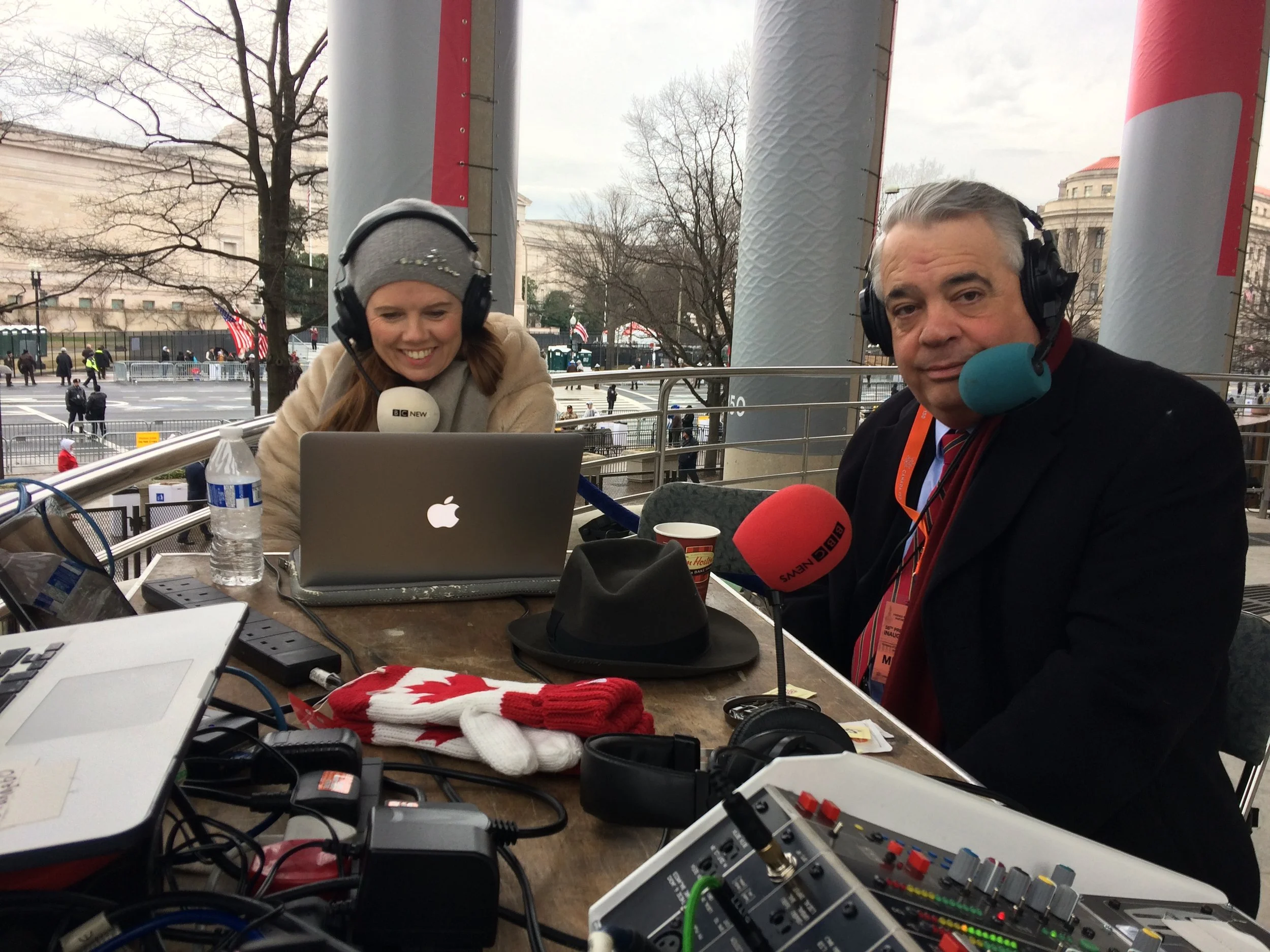
McGovern approaches interviews with warmth and compassion, always trusting her editorial light bulb when she spots a good story. We caught up with her at the Student Publication Association‘s National Conference 2025 to learn about a day in the life of the broadcaster and presenter.
What does a typical day look like for you?
It’s quite structured, my alarm is set for 5:50 and my clothes are already ready, very quick shower, then I am in a cab at 6:10. I start listening to the Today programme on the way in to have an idea of the news stories that morning. I get into work by 6:30. The producer and I go through the newspapers. We’re listening at the same time, so really consuming news. Then we have an editorial meeting until about 8:00, where we decide the news story of the day.
We’re on air at 10:00 and we do the show until 11:00. Then we have another look-ahead meeting, as we call it, at 11:15 where we talk about digital, about the next day, how the show went and all that feedback. I’m always starving at this point since I have my breakfast at about 7:30, so when I finish,I get something to eat.
What is your favourite breakfast?
Breakfast is the same every day – it’s overnight oats made by my lovely husband that I just pick up on my way out the door. Then for lunch, I often go to the Little Portland Café where I can get a fry-up or scrambled eggs, and then I go home. I take a little break and then start again. And if I haven’t gone to bed early enough, I might need a little nap.
But then I’ve always got lots of work to do for the next day. I have a book that I need to finish reading, a documentary I need to watch and I also want to look into a certain investigation, for example.
Then, I have my dinner rather early and I try to be in bed by 21:30. That’s my day!
How many unread emails do you have right now?
Seriously? Seventy-five thousand? But I worked it out. The way I look at it is, say it takes you five minutes to read an email. Multiply that by seventy-five thousand. The amount of time I’ve saved?
Have you always thought you’d be a journalist and what would you be if you had not become a journalist?
I didn’t think I’d be a journalist. When I was a little kid, I do remember sticking my head in a cardboard box and pretending I was on the telly! So, maybe there was the glimmer of it there. I wanted to do communications at university. But to be quite honest, I didn’t have enough points.
Still, I found my own way back to it eventually. I did English and Italian, and Latin for a bit, in college. I had a lot of jobs after. I taught English as a second language, sold handbags, worked in bars and restaurants, and in a law firm. I didn’t really come to journalism until I was 25.
I would have liked to have been a pilot. I did really well on the aptitude test. But then I went on my holidays and when I came back, there was a letter there for a training program with Aer Lingus. But the interview was the next day, so I didn’t have enough time to study!
I think I would have also liked to have been a casting director. I’m really good at knowing what people are good for what jobs. When I was an executive producer, I always made excellent hires. When I look at those people now, they’ve gone on to do great things in their careers.
Can you instantly read people?
Not really. I don’t think you can go on first impressions. You need to give people a little bit of time. Humour is really good. I’m often shocked that if you smile at people, they generally smile back, even in London. So if you’re quite open, people will be quite open with you. You have to try and find the part of the story that is the most compelling or the most surprising and that will prick people’s ears up and draw them in. You don’t want to give the whole story away. I think most people have something really interesting about them. You just have to get there.
TV or radio?
I’m in radio at the moment and loving it – loving the combination of digital and radio.
Want To Delve Into The Daily Lives Of More Journalists?
We’ve interviewed dozens of people about their jobs, getting into the industry, and what they might do differently. Here are just a few:
• George Greenwood, Investigations Reporter at The Times
• Josh Barrie, Food and Drink Writer at The Standard
• Martin Booth, Editor at Bristol24/7
• Megan Wallace, UK Editor at the Gay Times
• Georgina Quach, Newsletter Editor at the Financial Times
• Dan Cody, SEO Editor at The Evening Standard
• Josh Sandiford, Journalist at BBC Midlands
• Louisa Wells, Head Of Podcasts, The Telegraph
• Carla Jenkins, Social Media Journalist, The Times Scotland
• Lukanyo Mnyanda, Scotland Correspondent at The Financial Times
• Laura Webster, Editor at The National
• Severin Carrell, Scotland Editor at The Guardian
What is the first thing to know about radio?
That you don’t have to fill all the pauses. A pause can be good. A pause can tell more than words.
If you can go on holiday tomorrow, where would you go?
You know where I loved? I went for work, but I’d definitely go back on a holiday, Taiwan. It was amazing. I didn’t really know much about it, but the vibrancy on the streets of Taipei… You’d be tired from the jet lag and working all day, you’d step out in those streets and it was like you were electrified. The food was amazing. The people were great. I would love to go back for a holiday there.
What is a topic you have kept coming back to throughout the years?
Irregular migration was something I kept going back to, because there hasn’t been any solution to it. It comes up in every country. They talk about it, perhaps even more so now in the United States with Donald Trump having his second term.
It’s something countries in Europe have often fallen out over. I think it’s fascinating how people interact with immigration and migration, all the stories of the people who are fleeing and the reasons why.
Now it intersects with the climate crisis. I think Bangladesh and places like that will be the epicentre of it. So it’s a very broad term and there are many strands of conversations that come from it.
How do you find inspiration on what to work on?
Probably because I’ve been doing it for years, I’ll read something and I’ll go, that’s a good story. That person is interesting. You just get this little editorial light bulb. You could be walking down the street and then you see some amazing street art on the wall. Or you could be chatting to your mum and she brings up somebody she saw in a magazine. It could be something you overhear from a conversation while you’re on the bus.
I think my antennae are up most of the time. And I have a fun game I play with myself. When I see a story for the first time, I’m like, that is going to become the most read. And I’m usually right! So, that’s my superpower.

Keep a really good contact list. Don't throw any contact away. Network from an earlier age, check in with people. Check in with them even just once every couple of months and let them know what you're doing, so you are at the front of their mind.
Nuala McGovern, BBC broadcaster
You mentioned that you enjoy your time at BBC Woman’s Hour. What is one issue that is not talked about enough?
There are so many facets to it. I don’t think it’s one story. I guess the overriding is gender equality. And no country in the world has it yet. So when we look at stories, we try to understand why that is and if there are measures that can be done to help rectify that.
If we go to the UK, where does childcare come into that? Where does paternity leave come into that? Are men taking paternity leave, even if it’s offered? What’s holding people back? What stands in the way? It’s also really important to remember people who’ve gone before us, who perhaps have been written out of history.
It is also not all about girls and women either. We had Adolescence recently which so many people were talking about. Obviously, what happens to young boys also affects young girls. So, you need to think of it a bit more expansively than one small sector or one small story or even one demographic.
What would you advise young people who might want to follow in your footsteps?
Keep a really good contact list. Don’t throw any contact away. Network from an earlier age, check in with people. Check in with them even just once every couple of months and let them know what you’re doing, so you are at the front of their mind. And have a system for that! Back in the day, we had a Rolodex, but I’m sure there’s a better way!
You’re in college, start making that list and follow people, be interested in them. Not always for what you can get from them, but also for what you can give to them, how you can collaborate.
Journal and keep those diaries. I kind of wish I had. I have some memories in my head, but there’s an awful lot that’s probably forgotten along the way.
Be aware of what you put up on social media because it will live there forever. Think about impartiality as well. Different people have different takes. But if you’re going for a big news organisation, impartiality will be really important.
Another bit of advice is to think about your skill set. What are the trends? In what way is the media moving? What digital skills will you need to have in the future? Where is it exploding? See how you can make the most of it.